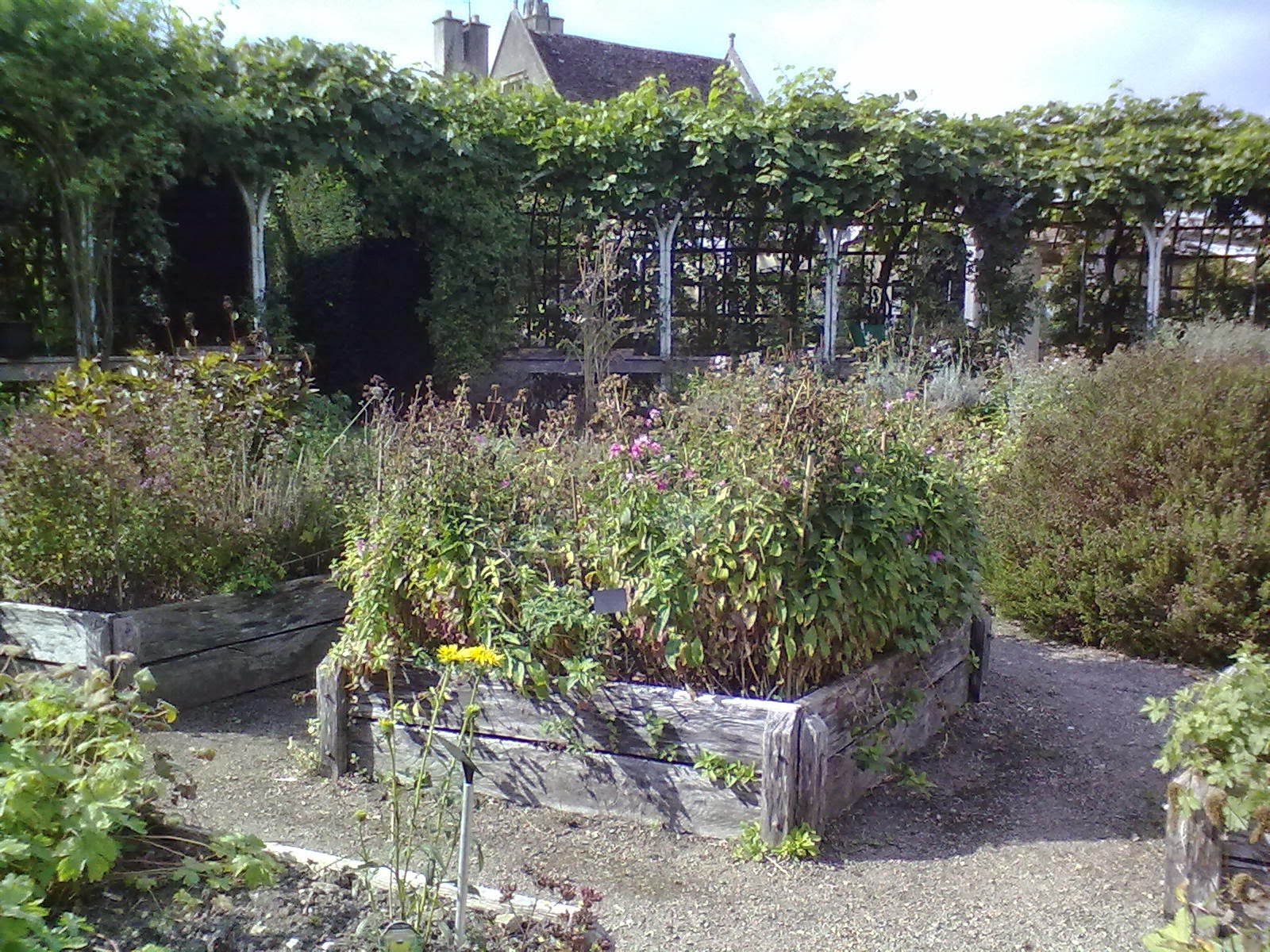
Showing posts with label garden visit. Show all posts

Tuesday, 4 June 2019

Chelsea Flower Show 2019: zombie apocalypse aftermath

Well, everything they say about Chelsea Flower Show is true. Yes, everything!

It's big, it's commercial, it's horrendously expensive: it's fantastic, there's so much to see, it's very well organised: there are too many trade stands, too many other people, not enough show gardens; there are lots of trade stands and shopping opportunities; it's all as fake as a fake thing (having to look at stands full of flowering hydrangeas - ours, locally, are barely budding  up - next to stands full of flowering daffodils is a bit of a strain on the horticultural credibility), but it was still a fabulous day out!

I haven't seen any of the TV coverage - on account of not having a TV - nor have I read any of the reviews etc, other than to have noted that "Kate" had created a garden, so this review probably won't say quite the same things as the other reviews...

After an early start, and a rather giggly journey on the luxurious Oxford Tube coach (still can't accept a coach called "The Tube" as to me, being London born and bred, the Tube is the Tube, and that's that. End of diversion, please drive on:), we arrived at Victoria, hopped on the shuttle bus and found ourselves in a steady flow of Chelsea visitors, entering the showground.

We worked our way gently through the security search ("Oy! Give me back my Hula-hoops!") then headed for the Pavilion, on the grounds that a) most people were heading straight for Kate's Garden,  and b) we weren't quite sure about the weather, and if it should chance to rain everyone would stampede for the shelter, so we thought we'd get it done first.

Good decision, as it turned out: it was sufficiently un-crowded that we could move round at a decent pace, and it hadn't yet heated up to boiling point in the sun.

So, the Pavilion: that's where the plants live. Lots and lots of plants, rather like a "Best of Village" gardening show, but on a large scale and - generally speaking - without the veg. Many of the stalls were one-hit wonders, a chance for the plant breeders to show you just how many garish colours they can breed into their specialist subject: but quite a few had made an effort to create a mini-show garden, which we all enjoyed more than just "here's our plant in red, here it is in yellow".

To give you an idea of how un-engaging the Pavilion was (to me, that is) I only took one photo:

... and that was more to remind me of the cunning positioning of a bonsai within a circle of painted wood.

Now I am looking for a garden in which to create something like this.....

After an hour or more in the Pavilion, and having narrowly avoided being part of the filming while we were - fruitlessly, as it turned out - trying to get to see the Ikea stand, we escaped and went out to see the D-Day landing memorial garden.

This is not quite a garden, it's more of a cross between an art installation and a memorial, and is quite wonderful.

On the right-hand side, you have the garden part: something like 11,000 individual Sea Thrift plants (Armeria maritima) in white and pink, all carefully grown in pots, crammed together on the forecourt of the Royal Hospital to form the illusion of a windswept, sandy beach. Among the plants are 15 stone plinths, representing the troops who fought at the D-Day landings: each engraved with a quote from an individual veteran.

At the front of the line is a life-sized statue of one particular veteran, Bill Pendell MM, who is a local man, he comes from Stanford in the Vale. The statue shows him as he was last year, age 97, and depicts him sitting, looking out to sea.

On the left is the "sea", an impressive structure of grey steel girders and chippings, representing the waves of the  landing. Among those waves are some ghostly images of young soldiers, cleverly made by welding washers together to form a chain-mail effect, but only detailing part of the soldier, giving them an ethereal, transparent quality.


(apologies for the photo, I didn't take one myself due to the excessive quantity of elbows and hats around me, so I pinched this one off the internet.)

The concept is that the 97-year-old Bill sits on the right, watching  his younger self rushing out of the waves. Of course, we all ask ourselves what he would be thinking, what he would say when he saw his younger self on the beaches: sadly, we'll never know because Mr Pendell died last December - after the sculpture was made, but before seeing the installation.

The garden was, like all the show gardens, fenced off to keep out the masses, but a special few people were allowed to go inside and walk around it.  And the lovely part is that after the show, the whole garden is being packed up and reinstalled in Normandy: not only that, but the foundation who raised the money for the garden are also paying for 75 veterans to be brought to London to see it.

After seeing this, we found somewhere moderately quiet to eat our packed lunches: we're not daft, we'd heard the rumours of huge queues and over-priced food, although to be honest, it didn't look that bad: £10 for a smallish portion of fish and chips seems quite reasonable to me, and the serving seemed to move along quite nicely.

Refreshed and renewed, we wasted 15 mins queueing for the loos - honestly, guys, come on: the briefest of brief surveys suggested that the ratio of women to men was a minimum of five to one, so how come there were so few loos for the ladies? The organisers had made a bit of an effort, with a large block of mobiles loos (nice solid ones, not those nasty blue plastic tardis things) and a team of young staff chivvying us along ("Come on ladies! Move all the way through, more round the back, chop chop!") and a very effective mass handwash arrangement.

However, by the time we'd all been processed, the queue was faintingly long, and the volume of the grumbling was getting quite worrying. Fearing a riot, we hastened off to see the show gardens.

As always, they look lovely on tv (I used to have one, I know what the presentation is like) but in real life, you can only see one side of them, and then you have to fight your way to the barrier, and if there is someone particularly tall/stout/behatted in front of you, well, it's quite tricky to get a good view. And you don't like to spend too long looking, as you are very aware of the crush of people behind.

But we managed to get a feel for the themes of the show gardens: to me, there was nothing particularly new there, it was all a bit derivative: lots and lots of rusty iron, and a strong theme of zombie apocalypse eco aftermath. You know, the zombies have eaten everyone, and nature is returning to take over.

Those show gardens which resisted the rusty iron, still went for the mock "wild" look, which - as a gardener - I find teeth-grittingly annoying. Why? Firstly because it looks lovely now, for the five minutes of the show (allowing for the fact that many of the plants at the show have been forced/held back/tortured in some way to get them perfect for that one week) but - as several astute visitors said out loud - once this plant and that plant have gone over, there'll be very little left to look at for the rest of the summer, and nothing at all left for winter interest.

And secondly because creating and maintaining a "wild" garden takes just as much time as creating and maintaining a traditional garden, which many people don't realise. I don't mind if a garden owner wants a wild garden because it's wild, because it reminds them of their childhood, because they want to be friendly to wildlife etc. I start gritting my teeth when they want a wild garden because they think it will be low maintenance.

Oh no it won't! I'll be writing about this separately, so come back later if you want to  know more on that topic!

So what did actually catch my eye?  Well, first was this very contemporary garden, mostly because one of my Clients wants to install a narrow rill in their garden, and wanted ideas:

...this isn't quite what they are looking for, but I rather liked the idea of the very narrow stream, easy to  step over. And I liked the idea of using different coloured stones for the edges, so you can see them!

Not so keen on the "concrete slab" footbridge though - it's not the concrete slab-ness that I dislike, as that is actually quite in keeping with the rest of the garden, but the fact that they've put it behind (from the point of view of the chair and table) the wall. With greenery overhanging it.

Why would you choose to do a tightrope balancing act on a narrow footbridge, then squeeze round the back of the wooden wall - actually the side of a pergola - brushing through foliage en route?

I can't help feeling there was a slight mistake in the build.

Please note, again, the "wildflower" style planting. Nice for five minutes.... not exactly lovely all year round, though.

The next thing that caught my eye was the garden produced by the Australian adventure holiday company, and not just because they were dishing out free goody bags.

(I do love free goody bags!)

Love the dear little wombat on the left (comment overheard from another visitor "Oh look, a beaver!"), and the iconic Koala. Not quite so sure about the Foxgloves, though: I would not  have considered them to be native Australian plants.

*slight pause while I go and check*

Oh! "Naturalised in some parts of south-eastern Australia"

Well, that told me.

Meanwhile we were hearing from other visitors that the queue for "Kate's Garden" was now reaching inter-galactic lengths, so we decided to give that a miss.

Instead, we hopped up into the exhibit next door, which was a treehouse, in the hopes that we'd be able to see over and down into it, but alas, "Kate's  Garden" was surrounded by trees and we could not get a single peek. Drat!


Finally, I took a photo of this stand which showcased some fantastic metal water-feature trees sculptures.

I've wanted one of these since seeing the copper weeping willow water tree at Chatsworth, and these were far, far better than that.

They had a stand full of them, so they'd built a shallow tank to house them, and the sound of the "rain" was like that of a thunderstorm!

The trees are getting more and more realistic, and as you can see, they're now making strange but colourful flowers which also spout water.

Lovely!

I'm not quite sure how I'm going to fit one of these into my tiny garden... in a perfect world, I'd have the whole thing installed!

Alas, the firm who make them have had a total "Fail" on the advertising front, as I can't find them on the internet: I've searched for Chelsea 2019 trade stands, artificial trees, water sculpture, water trees, copper trees, etc etc and I still can't find who makes them.

So, that was Chelsea 2019: zombie apocalypse aftermath, wildflowers and weeds, rusty iron, and well worth getting up very early in order to get there not long after opening time, in order to have a chance to see round before it got too crowded.

Best points: showground policy is "no dogs, no prams, no pushchairs, no babies, no children under 5". It's a show for grown-ups, and it was lovely. No screaming children, no perpetually being run over by buggies, no having to watch your every step for fear of treading in dog poo.

Worst points? Definitely the queueing for the loo. I have submitted feedback to the RHS. *laughs*

Will I go again? Unlikely: having now looked at photos on the internet (while searching for the metal tree people), I can  honestly say that you get a better idea of the show gardens from the tv coverage and the internet - after all, they are able to compose the shot (hahaha, I typed "compost" instead of "compose" there and had to go back to change it!) to show off the relevant/best features of the garden, and you don't get bumped into, while you are trying to see them.

However, I do think that the Chelsea Flower Show is something that everyone should go to once (everyone who is interested in gardening, that is!) and I am extremely happy that I have now ticked off that box, with grateful thanks to the kind friend who invited me to go!


Did you enjoy this article? Did you find it useful? Would you like me to answer your own, personal, gardening question? Become a Patron - just click here - and support me! Or use the Donate button for a one-off donation. If just 10% of my visitors gave me a pound a month, I'd be able to spend a lot more time answering all the questions!!

Tuesday, 4 October 2016

Sezincote: lacking in charm, right from the start

I've been to this garden once before, on a rainy afternoon (my favourite time for garden visiting, as it reduces the competition!), but only briefly, so I was looking forward to seeing it again, and having time to see all of it, and a few weeks ago I finally managed to get back there.

This time, I managed to drive directly to the car park entrance instead of having to drive all through the park, which was a good start: but on reaching the payment booth, I encountered a seriously grumpy woman who wouldn't smile, didn't respond at all to my friendly greetings, and who, when asked for a map of the garden, snarled "it's in the guidebook, £3."

Charming! I do consider that a map of the gardens is essential when garden visiting: how else are you going to know that you've seen everything? But to charge for one? Huh! *rolls eyes*. Virtually all gardens give you a map: sometimes you are loaned a laminated one, to be returned on the way out, which is an excellent way to do it - after all, what use is the garden map once you leave? - and sometimes you are handed a simple A4 paper map, that's all it takes, but no, not at Sezincote, you have to buy the guidebook.

Trying to look gracious instead of pissed off, I bought the guide book: this time, I intended to see the whole thing, so I grudgingly paid the extra money - in cash, incidentally, as they don't take any form of electronic payment. How very odd! In this day and age, they insist on cash! Makes you wonder if they are declaring all their income, doesn't it? I can't imagine how you can expect to run a business, sell tickets and indeed sell teas and cakes, without taking any form of card payment.

Anyway, turning to the rather slender guide book, I unfolded the paper map and guess what, on my previous visit I had indeed seen all of it. It's not actually that big! Oh dear. Well, let's check the guide book then: oh good, it has a brief history of the house, then it goes on to a Garden Tour, so I followed their suggested route.

The first thing I have to say is that the gardens are weirdly dislocated from the house. The "tour" starts by directing you up to the house, where there is a small area of formal garden to one side: it has a moderately nice water feature (which I would not describe as a "canal" as you can easily step over it), and a lot of my pet hate, Irish Yew which has been tied up with wires and chopped with hedgetrimmers in order to keep them slender. The guidebook explains that the design called for Italian Cypress, but they would not be reliably hardy in this position, so they used Irish Yew instead. I suppose that makes it ok....

Above this rather soulless and empty area, there is a long Orangery: anyone know the difference between an Orangery and a Conservatory? Nope, me neither. This is where the age of the guide book started to be felt, as the description of the plants within it did not fully match those in existence - plants don't live for ever, and clearly some have had to be replaced over the years. But at least I did get to see a Fatshedera in real life: a strange "why did they do it?" hybrid of Fatsia and common Ivy, which creates a semi-climbing shrub with leaves that are more like Fatsia than Ivy: and is as good an argument against genetic modification as any that I have heard.

A quick stroll around the "wildflower meadow" proved yet again that it may be trendy to have a wildflower meadow, but it's not always a great success: theirs, in August, looked like nothing on earth, just tatty grass, with dead stuff in amongst it, a ton of Wild Carrot (which looks exactly like Cow Parsley to non-gardeners) with a few tiny bits of Lotus corniculata (Common Bird's Foot Trefoil) scrambling at the edges.

Following the instructions in the book, I took the pleasant stroll on mostly grassy paths across the hillside, thinking as I did so that it would be dreadful on a really wet day... and passing on the way a set of three interesting little stone niches: not quite grottoes, not quite an ice house, not quite big enough to walk into it, but deep enough to be intriguing. Alas, no mention of them in the guide book.

On reaching the top pool and fountain, I took the time to read the guide book and to try to locate all the planting it mentioned.

Hmm, 12 years is a long time in a garden, and evidently a lot of the planting has been replaced over the years!  Still, it's pretty enough, and leads you into the rest of the garden, which are basically in a linear strip running down the side of the drive. The planting is lush, and there is plenty of it along the stream which babbles its way down the hillside, through a larger pond with a bridged island, to a terminal pond which was clearly being renovated, as the banks were scraped bare, with evidence of Mare's Tails being killed off.

I think what I enjoyed most about this garden were the lovely mature specimen trees: not all the ones mentioned in the guide book were to be found, but I managed to locate  and identify most of them. I think I must be having a bit of a purple craze at the moment, as the one I liked best was an enormous purple hazel, not exactly rare! Oh, and the saddest find was a recently-planted nearly-dead purple-leaved Birch, which you hardly see anywhere: the few surviving leaves were a fabulous deep purple colour, but an awful lot of the branches were quite, quite dead.

At this point I have to have a grumble: I've mentioned this before, and I'll no doubt do so again - why on earth do these paid entry gardens insist on using power tools during opening hours? This place only opens on Thursday and Friday afternoons (and Bank Hols) so why can't they cut the blasted grass on a Monday, a Tuesday, or a Wednesday? It's hard to appreciate the beauty of the views with a pair of hideously loud ride-on mowers cantering up and down, and throwing up dust. It also meant that there were no gardeners to be seen, so there was no chance of asking any questions.

Apart from that, it's ok, but a bit small for the money. I was quite disappointed to find that I had indeed managed to cover it all the other time I visited, and I probably won't be going there again, as there was nothing that felt particularly special. 

The grumpy woman on the entrance booth told me that they have a new Head Gardener, so maybe some changes will now be made: I did find one piece of new planting:

 ...and I have to say, it was like a breath of fresh air against the rather oppressively top-heavy growth elsewhere in this garden.

Makes you realise that "mature" planting is not always as desirable as it might sound! And I have to say, in my own gardening, I have noticed that my tastes have changed over the years that I've been gardening professionally. Fifteen years ago, I would not have "allowed" any bare soil to be seen - it was all about filling the beds.

But now I find that I prefer a little space around my plants: I like to see the structure of each one, I find it calmer and more peaceful to be able to see each plant in its own right, rather than stuffing the beds full of plants.

It's also healthier for the plants, allowing free airflow around them: it reduces the number of slug and snail refuges, and it allows the gardener (that's me) to move around the bed for weeding etc without trampling anything, or falling over whilst balancing precariously on one leg, trying to find a safe place to put the other foot down.

Overall, I would say that this garden is a very average way to spend an hour or so: not suitable for children as there is a lot of water, and in order to follow the route you have to negotiate the very exciting stepping stones under the bridge. These are not so good for wobbly Seniors either, I had to assist one lady who lost her nerve half way across!

There is also a fair uphill walk back to the car park, and it's a lot longer on the way back... you would have thought, with all those acres of fields, that they could allocate a parking area rather closer to the garden entrance? 

You do sometimes wonder why these people bother to open to the public, if they are not going to embrace the situation and truly welcome their visitors - I have a theory that there is some sort of tax advantage to being "open to the public", so they pay lip service by providing the things that make money, ie an entrance booth, a tea shop and (usually) a gift shop and/or plants for sale, but without really committing themselves to the experience.

On balance then: charmless from start to finish, and I doubt I'll bother to go there again.


What do you think? Did you enjoy this article? Did you find it useful? Would you like me to answer your own, personal, gardening question? Become a Patron - just click here - and support me! Or use the Donate button for a one-off donation. If just 10% of my visitors gave me a pound a month, I'd be able to spend a lot more time answering all the questions!!

Wednesday, 21 October 2015

Garden Review: Westwell Manor, Nr Burford

This is a garden open under the NGS Open Gardens scheme, which I visited earlier this year.

As an aside, I was talking to someone the other day who spoke at length of their dislike of the NGS, mainly - it seemed to me - based on class resentment. They had tried to deal with an NGS local organiser, I can't remember exactly why (they did tell me, but frankly I was losing the will to live after listening to their lengthy complaint), and were left with an impression of a lot of hooray henrys who were completely inefficient and seemed to treat the whole thing like an old boys club, quite removed from the real world.

Well,  I have met my local NGS organiser, and she's lovely, despite having a double-barrelled name, so I don't quite agree with their complaint: I've also been to many NGS garden openings, and usually they are a treat, a chance to see round a garden that is not normally open, and a chance to see a "real" garden, with real weeds, real neglected corners, and one which is used by real people, which can often be more interesting than the sometimes rather sterile National Trust type of garden, where they employ numbers of volunteers *grits teeth* (I have strong views on this subject) and where nobody actually "lives" in the garden.

However, sometimes you find one that is annoying: the Mill House in East Hanney is a good example, they opened a few years as one of a small handful of gardens in the village, participating in an NGS day. At the entrance there were three utter hoorays, sitting in the shade of their parasol and braying - "hwah! hwah! hwah!" is the nearest I can get to conveying the noise - to each other while ignoring us, the paying visitors. The garden was tiny, and mostly filled with a gigantic industrial cable-reel, I'm not sure if it was supposed to be a table, or a Feature. Weeds were abounding, good planting was not. It took less than five minutes to see the entire "garden", then we had to troop back past the owners, squeezing past some incoming visitors as we did. I very nearly wrote to the NGS to complain. But I didn't.

Westhall Manor was very nearly as annoying: firstly they had completely and utterly failed to make any arrangements at all for car parking. Every verge in the village was littered with cars, listing at dangerous angles and ruining the grass, as it had been very wet in the days preceding, and was drizzling as we arrived. Despite this, the visitor numbers were huge: the Manor was surrounded by gates and tracks leading to empty fields, yet they had done nothing about parking. It felt like one of those situations where the lord of the Manor "owns" the entire village and can steamroll any tentative complaints about insensitive car parking or ruination of front gardens.

Having parked on a verge way, way out of the village, and hiked back, we were greeted by a queue to get in, and the traditional trestle table with three people stood there, but only one person taking money, and no sign to tell us how much the entry was. The queue was formed by each person having to ask "how much is it?" and being told £6 (or whatever it was - it seemed quite high) then having to rootle around in their purse. In fact, it was worse than that, as the publicity in the local paper had stated the entry fee, but incorrectly, so there were people presenting the right money, being told that it was more, which caused embarrassment, and confusion while people hunted for more coins, having put away their wallets and purses in the sure and certain knowledge that they helpfully had the right amount to hand.

Having paid extra for a map of the gardens - which I consider to be a bit of a liberty - we were firmly directed to the next trestle table, where they were selling bottles of wine. I don't think they had produced it themselves, I didn't see any sign of a vineyard or a bottling facility, so presumably they had struck a deal with a local wine merchant? Who knows. Who cares?

So now we come to the map: having had to pay extra for it - yes, I'm still annoyed about that - we had certain expectations. It was nicely printed, on very good quality paper, and seemed to be based on a rather wishy-washy colour-pencil drawing or plan of the garden. It was dated 1996... oh dear, they've been using the same map for the last 20 years? Perhaps they had thousands of them printed, and have been working their way through them ever since? Bit of a cheek to charge money for it, don't you think? Twenty years old and somewhat out of date, as there were elements of the garden completely missing from the map, not least being an entire section containing a tump, and what was presumably supposed to be a wildflower meadow of considerable size.

However, that was not the last of the annoyances of the map: they had made the obligatory list of named features, designed and intended to encourage visitors to see all of the garden, and to navigate between places of interest. So far, so good - apart from being out of date, to the point where the tennis court (of little interest) had been replaced with a beautiful reflecting pool (very much of interest). But instead of using simple numbers, or even letters, as a key, they had chosen to use roman numerals.

*Sigh*.

How many people, in 2015, use roman numerals on a daily basis? How many people, for that matter, under the age of 40 would even recognise them? This struck me as so pretentious as to be laughable, and we spent the whole visit saying the numbers as they were spelled, ie "Shall we go and have a look at Eye Vee now?"  "Why yes - let's cut past Ex Eye and round Vee Eye Eye."  It was surprisingly difficult to work out which one was which, not least because they were all hand-drawn, and whoever did it was having to squeeze three symbols into a place where the single digit "7" would have been easier, simpler, and much clearer to read.

These initial impressions did somewhat taint my view of this garden, and it won't be one that I ever return to.

However, if you don't mind inadequate parking and pretentious presentation, do go there some time, if only to have a schoolboy snigger at their idea of stylish and classy topiary:


It is simply not possible to call this "garden room" anything other than "The Big Willy Garden".


And, just to make it even worse, the entrance to the Big Willy Garden is via a narrow slit in the hedge, towered over by The Big Boobies.

This poor lady clearly has no idea where she is standing.
Elsewhere in the garden we found such treats as this one: is it a new rockery, is it a mini wildflower "urban meadow" recreation, or is it - as we suspect - an overgrown weed-infested old concrete terrace?

At this point in our visit, I was approached by a rather irate woman, flapping her map and demanding "where is the tennis court, then?"

I  pointed to this feature - right - which clearly used to be the tennis court.

"Hmmph," she replied "That's not much good for playing tennis on, is it?"

I have no idea why she was so huffy about it: who would want a boring old tennis court in their garden when they could have a reflecting pool instead?  Maybe she had heard about the rather clever terracing or banking that had been constructed around the "other", presumably newer, tennis court, and wanted to see it? We had found it, incidentally, but only by being nosy, as it wasn't on the map.

And so to the actual reflecting pool - was it better than the tennis court it replaced? Well, yes, but it could have been done a lot better: take the one at Kiftsgate, for example. That one is stylish, elegant, interesting, and amusing.

This one, in my opinion, is a bit dull: for a start, it's too big, as they seem to have felt the need to take up the whole area of the tennis court, and as it stands, it is not inviting to walk all round it. In fact, I'm not sure that you can. Furthermore, although it is raining in the photo, so reflections wouldn't work, even if the water were still, what exactly is it reflecting? Green hedges. Hmm.

My final comment on this garden concerns the vegetable garden, or "Ex-eye" as they call it.

Can you see the climber, working its way up the chicken wire netting of the fruit cage? At this time of year, the leaves are dying, but the fruit is ripening nicely.

Can you see, on the left, those bright red berries?

Red berries, in a fruit cage.

Good?

Not so much - the climber is White Bryony, Bryonia dioica. The berries are poisonous.

Just saying.

Wednesday, 30 September 2015

Garden review: Misarden

Back in July I had an odd afternoon off, so I went back to Misarden Park Gardens for another look round - this is a small garden with a minor identity crisis (it's Misarden-with-an-a Park Gardens, on the Miserden-with-an-e Estate) outside Stroud, just off the A417 but very tucked away. The route from the A417 involves turning off at the Winstone turn, then following a narrow windy lane that - following my sat nav - gets narrower and windier, clinging to steep hills, skirting woodland, and diving into tiny hidden valleys.

It's almost worth going there just for the journey!

Having survived the cross-country part, you arrive at Misarden village and then have the challenge of finding the place, as - in common with many of these places where the Estate "owns" the village - they don't feel the need to put up nice clear signs, and every turning looks like the entrance to somewhere private.

I've been there three or four times before,  but I still went the wrong way and had to do a 3-point turn before spotting a turning that I vaguely recognised. It still felt like entering someone's private drive, but no, it turned a corner and lo! and behold, there was the tatty old barn, there was the gateway to the Plant Nursery associated with the garden, and there was the field of pristine grass which does not say "car park" but which seems to be used as such. This time, I was the only car there, so I bravely parked on the grass, wondering as I did so if some groundsman somewhere was looking out of a window and cursing these thoughtless visitors who park all over his nice green sward...

As always, there was no-one in sight, so I put my money in the Honesty Box, took a leaflet/map, in case they had added anything since my last visit (I hold them very gently, and if they are undamaged, I replace them on my way out), and set off. The recommended route takes you through a doorway in a stone wall:

 ...nicely framed by a wall-trained Cytisus battendieri, a strangely Zorro-sounding name for something whose everyday name is Pineapple Broom.

Pineapple? Well, I suppose so, but to me it look more more like a cross between a yellow Buddlea and Laburnum.  I thought the silvery foliage was lovely, though,  and it should be evergreen in mildish winters.

Resisting the urge to take a cutting, I went through the doorway which led straight into the big borders: a sloping lawn with two very deep herbaceous beds (one is a border, one is a bed with grass beyond) running down the slope towards the formal lawns: there is so much to see that the only way to do it is to go down the left-hand one, admiring the full depth as you go: back up the inside of the right-hand one, then down the far side of the right-hand one. Luckily the fourth side of the box, the wall, does not have much of interest on it, just a few shrubs.

Alas, I was so busy looking at the plants that I forgot to take a photo, but frankly I have found that amateur photos of herbaceous borders are simply not worth looking at - I don't know exactly how the professionals do it, must be something to do with depth of field, but every "border" photo I take is just a bland presentation of a mass of green with dots of colour.

Turning left from the double borders takes you into what they call the walled garden, and this year they have changed things around a bit: it's always interesting to see how "big" gardens do this. They seem to be paying lip service to the Grow Your Own brigade:

..by plonking what is possibly the highest and chunkiest raised bed I have ever seen, in the middle of one of the formal sections of the walled garden.

Weird!

And proportionally all wrong... it's too small!

*shakes head*

Makes you wonder whose bright idea that was. At least they managed to get it dead centre, and at least they put a nice mowing strip all around it, so I suppose if they were aiming to create a fusion of formal garden and veggies, they could be said to have succeeded.

Moving on, and trying not to laugh, I encountered another "new" area, this time rather more successful:

That's more like it! A large square had been marked and edged, a good firm path laid round the outside, then each of the four corners populated with a sturdy, shapely, elegant support, each planted with white sweet pea.

Have I already used the word elegant?

Well I'll use it again - very elegant.

The whole area was set as a diamond shape within the walled garden, which made a nice change from being set square, as it were, and I liked the simplicity of the layout, the repetition of shapes, and the single colour of planting.

If I were being picky ("Who? Me?") I would say that you would probably have to step off the path in order to pick/deadhead the flowers, which made me wonder: would it work if, having cleared the weeds (presumably here they lifted turf for the paths and beds so it wouldn't have much of a seed bank in the soil), you planted the sweet peas then mulched the bed with gravel to match the path? It would look even smarter, and you could step all round the planting without getting muddy shoes.

Of course, you'd have to, at year end, carefully scrape off the gravel mulch, and wash it clean for re-use, but hey, that's what the under-gardener is for, right? *laughs*

The next area of interest is, of course, the compost heaps!!

 You can tell a lot about how a place is run by the state of their compost heaps... in this case, what is the verdict?

Well, they are a very good size, they are open fronted which is less efficient but makes sense when most of the material is going to be brought up here on the back of the ride-on mower.

They all have weeds growing on them, so they lose a couple of points for that... and they don't appear to have a proper rotation going on. To me this is unforgivable, but I do know that in many of these large "estate" gardens, they have machinery to move stuff around: so when all three pens get half full, they use the digger to put all the top halves together, ie the unrotted stuff, so they can get to the good stuff. Each to their own, I guess.

Right, back to the garden: walking back down alongside the run of old buildings, I was trying to admire the Fruit Tree Wall, but my eye kept being distracted by the terrible edging of the border:

Come on, guys!

Get out there with an edger and make it straight!

Or at least make it nicely curvy!

I can't quite see why anyone would bother to weed under the fruit trees, yet not bother to put an edge on the grass... ho hum.

And it's not as though it is out of sight, it's on the main route back to the formal garden.

Perhaps they hope that people are so dazzled by the compost pens that they won't see it?

Or maybe they hope that the eye will be drawn ahead, to the rather lovely border running down to the formal lawn?

Bearing in mind what I said earlier about my inability to take photos of borders....


... there, not brilliant, but not bad, eh?

I was very struck by the lovely combination of purples in this border: small berberis at the front, and a mix of purple-leaved Elder (Sambucus nigra - possibly Black Lace but who knows) Cotinus coggygria 'Royal Purple' (also known as Smoke Bush, also comes in green, but who would have boring old green when you can have dramatic black?) and my personal favourite, Physocarpus opulifolius 'Diablo' which rejoices in the never-used name of Ninebark. (I have no idea why, it does not appear to have nine types of bark: cursory internet research suggests that the plant is described as having "exfoliating bark" so maybe people thought it had nine layers of bark to shed?)

The rest of the garden includes a very nice inset water garden, rather like the one at West Green House which I like so much (when it is not ruined by screaming children, that is) but on a smaller scale. I wonder if this one was the inspiration for it?

Meandering past it and down the big stone steps, I was accosted by a rather nice spaniel who wanted to show me the dead bird he was carrying. Yum, lovely! His owner apologetically told me that he could not be parted from it... she was on her way to the veg garden with a trug, to "pick some produce", so she was clearly the owner of the house. We had a short chat about the garden, but I didn't have the nerve to ask, as I always want to ask, how the owners of these places feel about having strangers wandering around all over it. There must be times when visitors ignore the "private" signs and look in the windows... do they not get tired of it? I would be constantly irritated by having people walking round my garden, but do they feel less ownership of their house and grounds, because it was inherited rather than bought with my hard-earned cash?  If you grow up with housekeepers, staff, gardeners, grooms, tutors, do you feel less connected to your house, less protective of it? Often you hear that the family are only "in residence" for certain months of the year, so maybe moving from house to house means that they think of all their houses the way I think of hotels: it's "my" room for now, but it's not "mine", and people such as cleaners and staff have the right to just walk into it.

Leaving aside such unanswerable questions (for now - one day I will meet a garden owner who is sufficiently friendly that I feel I can ask those questions. One day!) and returning to the garden, I continued my "usual" tour by slithering down the steep grassy bank to the main lawn and going right round the house to the far terrace, up the little steps - it's all right, it's on the map, we are allowed to be there - to a sort of terrace or patio, raised above the lawn, but so overgrown with a massive magnolia that you can't walk onto it:


...isn't that fab? You have to bend double to duck under the branches!

I love this little area, because it is the size of my entire garden at home, yet - she said, wryly, trying not to seethe with jealousy-  they have so much space that they can afford to let the Magnolia take it over, without even feeling the loss of it. *sigh*

My tour continues with the long walk across the big lawn in front of the house, then round into their small arboretum and back up the slope to the entrance, pausing to have a look at the Well en route.

Once again, I was virtually the only visitor: the lady I spoke to said that it is busier at weekends, (which is the main reason why I like to go garden visiting mid-week if I possibly can) but I got the impression that it is never heaving with visitors, so if you like a quiet, peaceful outing, with nice views over rolling fields: not too large a garden, but interesting: then put Misarden Park Gardens in your diary for next year, as they are closed now for the winter, and open again in April. 


Did you enjoy this article? Did you find it useful? Would you like me to answer your own, personal, gardening question? Become a Patron - just click here - and support me! Or use the Donate button for a one-off donation. If just 10% of my visitors gave me a pound a month, I'd be able to spend a lot more time answering all the questions!!

Saturday, 29 November 2014

Abbey House Gardens: closing down.

Earlier this year I heard the news that this glorious garden was closing, as the owners are divorcing and having to sell in order to split it, so I rushed down there to have one last look around.

In case you haven't been there, it's almost in the middle of Malmesbury, the couple (former couple) who own it are famously nudists, and garden in the nude, and allow nude open days where visitors leave their clothes at the entrance. In England! In our weather! *rolls eyes*

Luckily I have managed to only visit on "clothed" days, although I've seen Ian, the owner, in just boots and very brief shorts, which was quite shocking enough to someone who regularly comes home scratched, bleeding and covered in insect bites from my normal day's gardening in "normal" clothing, and who cannot imagine how battered I would be without any clothes at all.

 Here are a few snaps from the day - starting at the formal gardens, which I always enjoy, as I love the feel of formal gardens, as well as having a professional appreciation for the time it takes to get topiary into shape.

Here's a lovely example of "over and under" box hedges, and yes, that is a tortoise on the left.

He's not allowed to wander around at will, but it seems to take him quite a long time to get from one side of his pen to the other, so I guess he doesn't mind.


Here's another corner of the same "room", with another lovely variegated holly in the middle.

That thing on the right is possibly the biggest pot-made-into-water-feature that I have ever seen...


What a whopper!

I was trying to do an arty shot with the reflection of the house in it, but didn't quite get it right.


More topiary, this time they've carefully presented the date 2000, which is presumably the date they planted it.


I love the detail that goes into this sort of topiary - look at the elegant shape of the "2".


 Now this is what I call a water feature - a slender tapering spindle with water tumbling from the very tip, and shimmering all the way down to the bottom.

On a good day, it looks as though it is spinning in  place.

It's made of separate discs on a central pole, so you can just see through it - another lovely effect.

 Oh dear, another attempt at an arty shot between the hedges.
Now we get to the herbaceous beds, in the next section of the gardens: in a way, I enjoy seeing other gardens looking a bit messy and tired at this time of year (I went there in mid September) and this bed certainly looks as though it could do with a bit of attention!

I've seen the long borders very early in the year, and they are cunningly banked upwards from the path to the back, so that you get a much better layered effect once everything is in flower.


Another bed, another urge to get in there and weed it!
 The vegetable garden was looking particularly tired...
 ... and some of the beds looked as though they could do with a bit of structural attention.

Presumably, once it had become apparent that the owners' relationship was over, decisions were made not to indulge in the usual maintenance that you need to keep these raised beds looking good.

Leaving the formal gardens behind, I headed out the "back" to the wild area.

And there I found this cheeky little fellow growing on the hillside, as though he had the right to be there!

(Japanese knotweed, in case you don't know it.)


Minor digression - have you seen the size of the fish!!!

They have a big raised pond by the tea shop, in which they have a lot of Koi carp, a typical decorative fish for posh gardens.

I hadn't been for a couple of years, and I was staggered at how big they have grown.


OK, without anything to give it a sense of scale, it's hard to accept how huge they are, but please believe me that this one is well over two foot long, and I doubt I could get a grip on his body, even using both hands around the middle.

Not that I would ever try, of course!

They are very inquisitive and friendly, as the staff take pains to feed them when the visitors are looking, and they give small paper cups of fish food to little kiddies.

 Moving down into the wooded area, I was very saddened to see that so many of the Tree Ferns have died.

I remember when they were newly planted here, they were "the in thing" and it was very enviable to see how many of them had been planted.


Sadly, though, they are now looking more like a petrified forest than a flourishing jungle.
 Here's one of those odd little things that catches my eye and intrigues me - here's a lovely dry-stone retaining wall along by the house, beautifully built, but look, there's one big block sticking out!

Why? Why? I want to know!

As there was no-one to ask, I headed on down to the lake, looking very jungly in the September sunshine.


And here is their funny little tump - it's the spoil heap from digging out the ponds below, apparently, so they have made a virtue of it by adding spiral paths and a cute little hut at the top.


Heading back up to the house again, on my way out I took another snap of this lovely topiary, I love the use of the two colours to emphasise the shapes.

And finally a quick plant snap - I don't usually take many photos of plants (well, I do, but they are never worth looking at!) but this was irresistible: ever seen one of these?

It's a Fascicularia bicolour.

"What?" I hear you cry.

It's a Bromelaid, which are mostly aerial tropical jungle plants which have to be grown as houseplants over here.

Not this guy!

It likes full sun, and it likes being well-drained, but apart from that it will grow in most of the UK quite happily, outdoors all year round.

It's not as spiky as it looks, and in late summer the leaves start to turn this very bright scarlet. In a good year, this is followed by a bright blue flower, apparently.

I was kindly given one by a fellow Professional Gardener earlier this year, which I split up and potted on, and I have high hopes that in a year or two I'll have a surplus of them ready for sale.

So there you have it, my last trip round an interesting and contemporary garden, now sadly up for sale but, even more sadly, well out of my reach. 


Did you enjoy this article? Did you find it useful? Would you like me to answer your own, personal, gardening question? Become a Patron - just click here - and support me! Or use the Donate button for a one-off donation. If just 10% of my visitors gave me a pound a month, I'd be able to spend a lot more time answering all the questions!!

Monday, 6 October 2014

Balancing Stones

Slightly off-topic today, ie not actually about plants...  back in June, one of my Clients told me they'd enjoyed a visit to Asthall Manor, just northwest of Witney. They hold an annual sculpture week, during which they open the garden to visitors and display over 200 sculptures, most of which are for sale.

Now, I am not in the least bit artistic, but the garden sounded lovely, and it's not otherwise open to the public, so I trotted along and gained entry under false pretences: although when I bought my entrance ticket, and confessed that I'd actually come to see the garden not the sculptures, the lady on the desk said that I was far from the only one!

The gardens are, I have to say, lovely: a perfect combination of pleasing formal gardens by the house, and informal areas leading down to the stream.

They even had a wildflower meadow, and I can tell you from experience that it is not a trivial undertaking.

This one contained a very balanced mix of red poppy, lilac Agrostemma githago (a favourite of mine), blue Cornflower, wispy grasses, and white Ox-eye Daisy (my least favourite wildflower).

I suspect that they shave it down to nothing each winter, and sow it with a proprietary mix each spring. It's the only way to achieve this balance.

 Then I came across something I hadn't seen before - using the wire of the tennis court to support the sweet peas!

A clever and interesting idea: you can still play tennis on it, but it screens off the less-than-lovely court from the lower part of the garden.

I suppose it also affords a feeling of privacy to anyone playing tennis, as well.

Closer to the house were the formal gardens, very much to my taste: here, a novel twist on the usual box hedging parterre, which occupied a steeply-sloping bank running alongside the house.

I'm stood at the top, looking down.

The gardener - I always stop to have a chat with a gardener if I can - was working his way round, clipping the box, having not had time to get them all done before the opening.

When you install over 200 sculptures into a garden, apparently it makes a lot of extra work: not only having to create bases and plinths for them and mow around them, which you would expect, but it can also necessitate pruning and reshaping to create a suitable backdrop or frame for each piece.

Here's another section of the parterre, looking down on the main lawn. Each section of hedging was filled with a different selection of plants, some - as the gardener told me, with a sigh - more successful than others.

Personally I didn't envy him having to clip in such narrow channels between the hedges - I like room to get my feet down comfortable.

But I can appreciate the point that a narrow channel means you don't feel compelled to grow anything in it, and you can leave the clippings where they fall, as no-one can see them!

Elsewhere in the garden, there was a pretty little stream, a somewhat stagnant pond with sculpture in, on and around it: and a rickety-looking but very tempting bridge:

 I managed to resist going over it, just about.

Well, ok, I had no real inclination to try it!

Lovely construction, though.

Almost worthy of being labelled as a garden installation, wouldn't you say? *laughs*

Talking of installations (which is apparently a pretentious word for sculpture) - oh, I've just looked it up, and installations are generally indoor "art", whereas outdoors ones - or "outdoor interventions" as they are super-pretentiously called - are "often called land art".

You live and learn.

OK talking of the land art *restrains the urge to snigger* I suppose you might expect a post about a sculpture garden to have at least one picture of the actual sculptures?

Well, these are the only ones I actually liked, a series of five very large, beautifully carved and polished representations of a tulip flower opening.

Bizarrely, they were for sale individually.

What's the point of that? Surely most of their attraction lies in the progression from one shape to another? (Oh blimey, I've spent too much time talking about sculpture, I'm getting pretentious myself!)

Although I have to say, I did have the slightly unworthy thought that all they needed was a thick layer of cobwebs on an autumn morning to make them look less like tulips and more like the hatching face-hugger pods from the film Alien....

So, let's get back to the Balancing Stones of the title. I went there to see the gardens, which were well worth the visit: I frowned at, or laughed at, most of the sculptures, apart from the ones above: and I was utterly captivated by Adrian Gray, who was doing live demonstrations of his incredible skill at balancing stones.

In a quiet corner of the lower gardens, an area had been swept clear of leaves and debris, spread with shingle, and three wooden circles had been laid out, with a rope around to provide a safe exclusion zone.

Within the circles, this chap Adrian was carefully balancing stones - not little ones, bloomin' great big ones that he could just about lift.

Here he is, delicately placing an upper stone on a lower one.

On the left you can see one of the other arrangements, and no, they were not stuck together in any way.

They are just poised!

It took a little while, and I didn't like to interrupt him while he was concentrating, but once it was safely up I asked him about them, and he was gratifyingly easy to talk to.

Apparently he has always been a sculptor, and he started doing this aspect when he was involved in arranging some human figures, and he became interested in the way the heads balanced on the bodies.  This lead to balancing stones one on the other, and this lead to an exploration of how counter-intuitive it could get; how far "out of balance" could a stone appear to be, while still actually balancing.


Here he is, walking away from the one in the picture above, to talk to me.

Honestly, you would swear that it would just fall right off, wouldn't you?

But it doesn't. It sat there quite happily for twenty minutes or so, until a bunch of people arrived, and the tremors through the ground were enough to topple the left-hand one, and the third one that you can't quite see in this photo.

Whereupon he changed them around, and rebalance them to show the new arrivals.

He's been doing this for ten years now, here's his website: and if you get the chance to go to a live demonstration, I would recommend it.

The "best" part of his work is the live balancing, but you can buy - if you wish - one of his works for permanent display, in which case they are stuck together to avoid accidents. Apparently you choose the one you want, he brings the stones to your location, films them being assembled, then they are fixed together for safety, while you have the film to remind you of how it was done, which seems like a  nice compromise.

For this sort of live demonstration, he says that he takes some time to set the lower stones carefully and fairly securely on the ground, then he chops and changes between the upper stones. Each time he does it, it's different. Sometimes they stand for a long time, sometimes a simple footfall can topple them.

Fascinating!

Wednesday, 28 May 2014

Hanbury Hall: nice ice house!

OK it had rather more than just an Ice House, but I was particularly keen to see it, as I have quite an interest in Ice Houses: I think, like ram pumps, it's the concept of something that works, but does not need electricity.

What's a ram pump? Oh, it's a brilliant piece of early 1800s low-technology: it uses the force of falling water to fill itself, then that energy is used to squirt a small amount of water to a height well above the original water level. That is, a way to move water uphill. With no electricity. All day, all night, free of charge. OK, that's a very simply explanation, but if you want to know more, this is a good site to start at.

There's a lovely one in a garden at Blewbury which I visited many years ago - it is situated in the stream running through the garden, at a point where there is a small waterfall, only a few feet high, and it is still used to pump water to a water tower, which is then used to irrigate the gardens, which are inconveniently far from the stream.

It makes a lovely deep clonking sound at every stroke - I'm not sure if it would get annoying if  you had to listen to it all night long, but all the ones I have seen so far have been quite a long way away from the house, and they are also masked by the sound of rushing water, so I don't think noise would be a problem.

And an ice house is even simpler - just a small building, made of brick or stone, usually circular, usually partially underground. In the winter, slabs of ice are cut from local ponds and rivers and tipped into the chamber, and they remain frozen all through the summer, providing a sort of basic refrigeration, as well as providing ice for cooling drinks and even for making ice cream.  They are usually accessed by a long tunnel with a door at each end - to keep the cold in - and they are often covered with earth on top of the brick roof for added insulation.

Melting ice drains away from the bottom, and more ice is added each year as necessary. Again, no electricity needed!  These days they are disused, obviously, and most of them have been filled in over the years and lost. That's why it's such a thrill to find one still available to look at - there's a nice one at Grays Court and I was quite excited when reading about Hanbury Hall to find out that they had one, too.

The group arrived, to be greeted by Neil Cook, Head Gardener since his arrival in 1988 when he took the job, planning to stay for 2 years, as it was mostly mowing the grass. At that time the house was under threat of closure, the gardens were just grass, grass and more grass.

"Four days of mowing, one day of edging, then back to mowing again" as Neil said.

Then the decision was made to "go corporate" and promote the house as a venue for conferences, weddings, and so on, prompting Neil to propose a plan to restore the gardens, to provide a prettier backdrop for some of those wedding photos. Grants were applied for, bequests were received, and planting began.

The result shows how captivating garden restoration can be - Neil is still here, twenty-six years later!

Using a balance of archaeological investigation - both actual digging, and the technical Time Team "geo-phys" - old documents and plans, and a good dollop of common sense, Neil has created gardens from nothing, providing us modern visitors with a feel of how an early 18th century garden would have looked when it was fresh and new.

Too often, we visit these historical houses and see what is now over 300 years old: ancient trees, massive hedges, so it's a nice change to see what the people who first lived here, the ones who paid for the gardens, would have actually seen.

It's lovely to imagine the Head Gardener of the time saying "Well, my Lord, that new row of trees over there doesn't look like much now, but in a hundred years' time..."

As Neil pointed out, it can't be a totally accurate recreation: some of the documents contradict each other, and in several places the building has been altered, with doorways being bricked in, windows being changed, and so on, meaning that some parts of the formal garden would not make sense if plans were slavishly followed. Also, the needs of a modern public-access garden have to be considered, with wear and tear on pathways to be considered, as well as the free flow of visitors.

However, he is confident that he has remained true to the spirit of the original in the layout of the garden,  which leads to an interesting debate about the contents: at that time, new plants were constantly being discovered and introduced to England, and there was great kudos to be had from having the "latest" discovery. So, in recreating the planting of the garden, is it better to source "heritage" plants, the cultivars that were newly available in the early 1700s? Or is it more appropriate to use the newest cultivars that are available now, as they are the "latest" discovery of our time?

Our tour started at the front of the house, where the original symmetry of path, wall and bed was being recovered in gradual stages. To our surprise, the very first corner revealed the Vegetable Garden, not tucked away behind walls and hedges, but right by the front entrance. This was another way of demonstrating wealth in the C18th; "oh, look at my immaculate veg, as decorative as your parterres" as well as offering visitors the chance to choose what the cook would be serving with their meal afterwards. The neat rows, the  highly decorative but wastefully topiarised fruit bushes at the ends of the rows, the perfection, all shouts "Hey, I have the staff to do this!" and was clearly the bling of that era.

Moving round to the sunken parterre, it was almost impossible to believe that there was nothing here at all until Neil starting digging it out. "Just grass," he said cheerfully "straight across, right up to the top of the steps." He and his team dug out the infill of ages, rebuilt the walls, laid out the parterre, planted miles of box hedging, and the result is fabulous:


As you can see, every aspect of it is immaculate!

One interesting note is the spacing of the plants: this is in keeping with the 18th century approach, which could be summed up as Domination Over Nature.

It was all about control: the spacing between the plants, the tight clipping, the superb topiary, all contriving to show that Man has mastered Nature, and that this Man in particular - the owner - has the money and manpower to make it happen.


This is demonstrated even more dramatically in the next garden, which I can't call an orchard, even though it contains fruit trees: they are tightly clipped to produce these neat, tidy forms, with no thought for their fruiting capabilities.

Or rather, they are clipped like this to make the point that the owner is so rich that he does not need his trees to produce food for him: he can afford to clip them for his visual pleasure,  to show what control he has over nature.

A different age, eh?

The next part of the garden was laughingly called The Wilderness:


Yes, this is the correct photo, these neat rows of trees, alternating deciduous and evergreen, with the most fastigiate junipers I have ever seen for punctuation, are actually known as The Wilderness.

Not quite to my taste, although possibly in another 20 years or so, it may be a bit less impossible to get yourself lost in it.

We made our way through various other parts of the garden, including the Circle of Trees, the Bowling Green, the Orangery, and the Mushroom House at increasing speed, as one member of the group (er hem) had asked to see the Ice House which was not originally on the tour, and which was at a slight distance from the main gardens. Neil, being an obliging fellow, kindly agreed to take us there, on the understanding that we would blame that one member for any delay in getting our tea and biscuits.

When we got there, it was well worth the delay - a charming little building, partly underground so it appeared to be set into the hillside, with grass all around and over it. The tunnel entrance was long, and cool, and the interior brickwork was in absolutely excellent condition! I don't think I've seen one as well preserved.

The light which allowed us to see it came through an opening at the top, the one through which the ice was shovelled in winter.  I scampered round the back to take a look at it:

The opening is covered with a sheet of perspex for safety reasons.

You can see how thick the walls of the ice house are, and there is a considerable thickness of soil and turf on top of that, all contributing to the insulation.

When the fresh ice had been dropped in, this gap would have been plugged by a keystone, and soil shovelled over it again, until refilling was needed, which could have been a year or more later: if the ice house was well built, and well drained, the ice could last for 19 months, which is quite remarkable, and makes you wonder if it isn't time for some eco-group to start promoting a modern wave of ice house construction.

Luckily no-one blamed me for the delay in getting tea, and we headed back to the Staff workroom for a much-needed cuppa, and a very interesting lecture/discussion with Caroline, one of the other gardeners (it seems insulting to call her an Under-Gardener!) about volunteers, and how they are managed at Hanbury. No mean feat, with a pool of 70-80 volunteers, who turn up as and when they want to, with varying levels of skill (that's me being diplomatic) all of which have to be used, made to feel welcome and useful, and at the same time have to gently be prevented from destroying anything or arguing with each other.

After tea break, we were taken round the working kitchen gardens, where we found crops grown for sale and for use in the tea room: chicken and bantams, ditto: and the collection of polytunnels, heated and non-heated, in which they grow on huge numbers of plants for sale, generating a large proportion of their income. They supply several NT properties with plants to be sold, so if you've ever wondered where the plants for sale come from, there's the answer - an awful lot of them come from Hanbury!

I was somewhat surprised to hear that they buy in plugs and grow them on for sale, rather than propagating their own: but then, I was also surprised to see that they only have one small compost heap. Caroline explained that they are not a herbaceous garden - it's mostly trees, grass, and hedges, with the parterre planting being mostly renewed each year, to maintain the fresh, total-control look and the clear spaces between plants. I guess this means that they just don't have the plant material from which to propagate, which seems quite odd for a place with 20 acres of gardens!

One final thing of note: when we were in the parterre, our attention was drawn to a particular plant,  Pulsatilla vulgaris, Pasque Flower, which was just starting to go over. Visitors always asked one of two questions, apparently: either "How long does it take you to clip the hedges" or "What's that plant?", to the point where they were considering getting t-shirts printed with "It's a Pulsatilla!".

On our way out, two of us were walking back through the parterre when we were accosted by a group of elderly ladies, and guess what they asked us? Yes, you guessed it!


Did you enjoy this article? Did you find it useful? Would you like me to answer your own, personal, gardening question? Become a Patron - just click here - and support me! Or use the Donate button for a one-off donation. If just 10% of my visitors gave me a pound a month, I'd be able to spend a lot more time answering all the questions!!